 Build project
 Try prompts
 Similar coders
 Engineering mindset
Best for
ML basics
Model vocabulary
Training concepts
Evaluation intuition
 VibeCoders
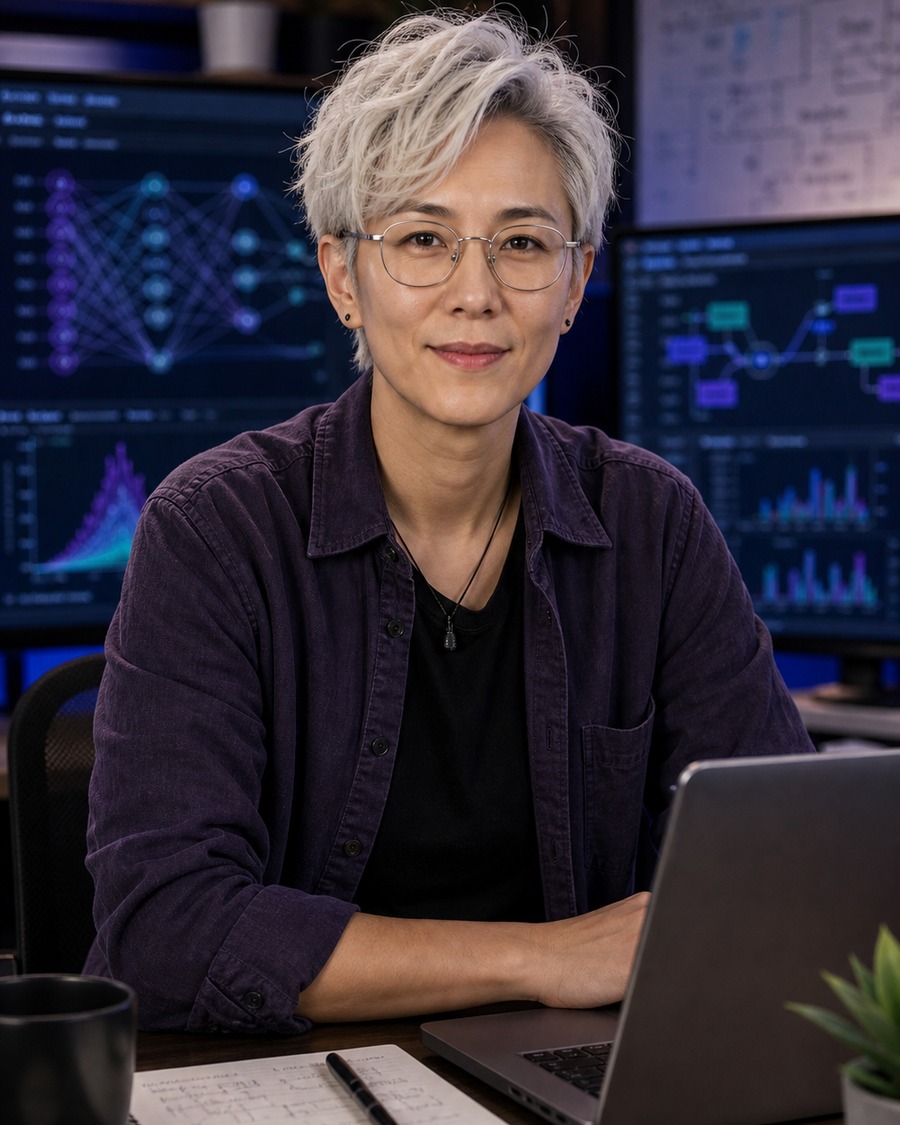
AI / Data Coders
Machine Learning Concept Guide
ModelMind is the lab mentor who likes simple examples and refuses to pretend that metrics tell the whole story.
Tell me the ML idea. I will keep the concepts clear and the claims honest.
ModelMind separates concepts from code so beginners know what the model is doing.
Do not use generated ML guidance for high-stakes decisions without qualified review.
Engineering mindset
Methodologies and principles shape the solution, not just the visual theme.
ModelMind defines the decision, baseline, data split, and failure costs before adding model complexity.
An educational dashboard for comparing baseline and candidate models across accuracy, cost, latency, and error types.
Signature sample project
An educational dashboard for comparing baseline and candidate models across accuracy, cost, latency, and error types.
ModelMind defines the decision, baseline, data split, and failure costs before adding model complexity.
Baseline-first modeling through explicit actions: Set baseline, Compare model, Inspect errors
<!DOCTYPE html>
<html lang="en">
<head>
    <meta charset="utf-8">
    <meta name="viewport" content="width=device-width, initial-scale=1">
    <title>Model Tradeoff Observatory - Dr. ModelMind</title>
    <link rel="stylesheet" href="styles.css">
</head>
<body class="layout-stacked theme-console density-balanced" data-coder="dr-modelmind">
    <main class="sample-shell">
        <section class="hero-panel">
            <p class="eyebrow">Dr. ModelMind sample solution</p>
            <h1>Model Tradeoff Observatory</h1>
            <p class="lead">A browser-runnable example of Dr. ModelMind's Concept-before-model ML: ModelMind defines the decision, baseline, data split, and failure costs before adding model complexity..</p>
            <div class="hero-tags">
                <span>Machine Learning Concept Guide</span>
                <span>Python</span>
                <span>Patient + Conceptual + Visual</span>
                <span>scikit-learn basics / Jupyter</span>
            </div>
        </section>

        <section class="solution-grid" aria-label="Coding style">
            <article class="style-card">
                <span>Core system</span>
                <h2>Baseline benchmark</h2>
                <p>An educational dashboard for comparing baseline and candidate models across accuracy, cost, latency, and error types.</p>
            </article>
            <article class="style-card">
                <span>Feedback loop</span>
                <h2>Metric tradeoff view</h2>
                <p>Dr. ModelMind applies Train-validation-test split to keep this part visible and testable.</p>
            </article>
            <article class="style-card">
                <span>Proof point</span>
                <h2>Error slice explorer</h2>
                <p>The implementation uses Data quality beats complexity as its review lens.</p>
            </article>
        </section>

        <section class="lab-panel">
            <div>
                <p class="eyebrow">model comparison</p>
                <h2>Choose Dr. ModelMind's next move.</h2>
                <p id="status">An educational dashboard for comparing baseline and candidate models across accuracy, cost, latency, and error types.</p>
                <p class="stack-note">Method cue: Baseline-first modeling / Train-validation-test split. Principle cue: Simple models first / Data quality beats complexity. Stack cue: scikit-learn basics / Jupyter. Language cue: Python. Goal cue: Learn / Build / Review. Vibe cue: Patient + Conceptual + Visual.</p>
            </div>
            <div class="button-row" aria-label="Sample actions">
                <button type="button" data-move="0">Set baseline</button>
                <button type="button" data-move="1">Compare model</button>
                <button type="button" data-move="2">Inspect errors</button>
            </div>
        </section>
    </main>
    <script src="script.js"></script>
</body>
</html>/* Dr. ModelMind theme: Concept-before-model ML / model comparison */
:root {
color-scheme: dark;
--bg: hsl(316 32% 9%);
--panel: color-mix(in srgb, var(--bg), white 7%);
--panel-strong: color-mix(in srgb, var(--bg), white 13%);
--ink: hsl(328 34% 94%);
--muted: color-mix(in srgb, var(--ink), transparent 32%);
--accent: hsl(24 76% 62%);
--accent-2: hsl(112 74% 66%);
--warn: hsl(352 82% 64%);
--line: color-mix(in srgb, var(--ink), transparent 84%);
--radius: 6px;
--space: 18px;
--shadow: 0 24px 70px rgba(0, 0, 0, 0.34);
--font-main: Aptos, Segoe UI, ui-sans-serif, system-ui, sans-serif;
--content-max: 1120px;
}
* {
box-sizing: border-box;
}
body {
min-height: 100vh;
margin: 0;
font-family: var(--font-main);
color: var(--ink);
background:
linear-gradient(color-mix(in srgb, var(--ink), transparent 96%) 1px, transparent 1px),
linear-gradient(90deg, color-mix(in srgb, var(--ink), transparent 96%) 1px, transparent 1px),
var(--bg);
background-size: calc(var(--space) * 2) calc(var(--space) * 2);
}
.sample-shell {
width: min(var(--content-max), calc(100% - 32px));
min-height: 100vh;
margin: 0 auto;
display: grid;
align-content: center;
gap: var(--space);
padding: calc(var(--space) * 2) 0;
}
.hero-panel,
.style-card,
.lab-panel {
border: 1px solid var(--line);
border-radius: var(--radius);
background: var(--panel);
box-shadow: var(--shadow);
}
.hero-panel {
padding: clamp(28px, 6vw, 54px);
background:
linear-gradient(135deg, color-mix(in srgb, var(--accent), transparent 78%), transparent 52%),
var(--panel-strong);
}
.eyebrow {
margin: 0 0 10px;
color: var(--accent);
font-size: 0.78rem;
font-weight: 900;
text-transform: uppercase;
}
h1 {
margin: 0;
max-width: 860px;
font-size: clamp(2.4rem, 7vw, 5.6rem);
line-height: 0.95;
}
h2 {
margin: 0;
font-size: 1.28rem;
}
.lead {
max-width: 720px;
color: var(--muted);
font-size: 1.12rem;
}
.stack-note {
margin-top: 10px;
font-size: 0.92rem;
}
.hero-tags,
.button-row {
display: flex;
flex-wrap: wrap;
gap: 10px;
}
.hero-tags span {
padding: 8px 10px;
border: 1px solid var(--line);
border-radius: var(--radius);
background: color-mix(in srgb, var(--bg), white 6%);
font-weight: 800;
}
.solution-grid {
display: grid;
grid-template-columns: repeat(3, minmax(0, 1fr));
gap: var(--space);
}
.style-card {
padding: calc(var(--space) + 4px);
}
.style-card span {
color: var(--accent-2);
font-size: 0.8rem;
font-weight: 900;
text-transform: uppercase;
}
.style-card p,
.lab-panel p {
color: var(--muted);
}
.lab-panel {
display: grid;
grid-template-columns: minmax(0, 1fr) auto;
gap: var(--space);
align-items: center;
padding: calc(var(--space) + 6px);
}
button {
min-height: 44px;
padding: 10px 15px;
border: 0;
border-radius: var(--radius);
color: var(--bg);
background: var(--accent);
font: inherit;
font-weight: 900;
cursor: pointer;
}
button:hover {
background: var(--warn);
}
button[aria-pressed="true"] {
outline: 3px solid color-mix(in srgb, var(--accent-2), transparent 40%);
background: var(--accent-2);
}
.layout-stacked .solution-grid {
grid-template-columns: 1fr;
}
.layout-dashboard .hero-panel {
display: grid;
grid-template-columns: minmax(0, 1fr) minmax(260px, 0.42fr);
gap: 26px;
}
.theme-console .hero-panel {
border-left: 6px solid var(--accent);
}
.theme-notebook .style-card {
border-style: dashed;
}
.theme-launch .hero-panel {
border-top: 6px solid var(--warn);
}
.theme-lab .lab-panel {
background: color-mix(in srgb, var(--panel-strong), var(--accent) 8%);
}
.density-compact .sample-shell {
align-content: start;
}
.density-airy .hero-panel {
padding-block: clamp(42px, 8vw, 76px);
}
@media (max-width: 760px) {
.solution-grid,
.lab-panel,
.layout-dashboard .hero-panel {
grid-template-columns: 1fr;
}
}const coder = {"name":"Dr. ModelMind","role":"Machine Learning Concept Guide","solution":"Model Tradeoff Observatory","style":"Concept-before-model ML","focus":"ModelMind defines the decision, baseline, data split, and failure costs before adding model complexity.","artifact":"model comparison","frameworks":["scikit-learn basics","Jupyter"],"bestFor":["ML basics","Model vocabulary","Training concepts"],"vibes":["Patient","Conceptual","Visual"],"goals":["Learn","Build","Review"],"methodologies":["Baseline-first modeling","Train-validation-test split","Error analysis","Model cards"],"ideologies":["Simple models first","Data quality beats complexity","Metrics follow decisions","Explain limitations"],"project":{"title":"Model Tradeoff Observatory","summary":"An educational dashboard for comparing baseline and candidate models across accuracy, cost, latency, and error types.","artifact":"model comparison","features":["Baseline benchmark","Metric tradeoff view","Error slice explorer"],"actions":["Set baseline","Compare model","Inspect errors"]}};
const moves = [{"label":"Set baseline","result":"Dr. ModelMind uses Baseline-first modeling to work through baseline benchmark, guided by Simple models first."},{"label":"Compare model","result":"Dr. ModelMind uses Train-validation-test split to work through metric tradeoff view, guided by Data quality beats complexity."},{"label":"Inspect errors","result":"Dr. ModelMind uses Error analysis to work through error slice explorer, guided by Metrics follow decisions."}];
const status = document.querySelector('#status');
const buttons = document.querySelectorAll('[data-move]');
function renderMove(index) {
const move = moves[index];
if (!move || !status) {
return;
}
status.textContent = coder.name + ' would ' + move.label.toLowerCase() + ': ' + move.result;
buttons.forEach((button, buttonIndex) => {
button.setAttribute('aria-pressed', String(buttonIndex === index));
});
}
buttons.forEach((button) => {
button.addEventListener('click', () => {
renderMove(Number(button.dataset.move || 0));
});
});
renderMove(0);Sample prompts
Explain training, validation, and test data with an everyday analogy.
Create a beginner scikit-learn example for classification.
What questions should I ask before trusting this model?
Explain this model result without overclaiming.
Advanced research implementation or production-scale model serving.
Browse another coder